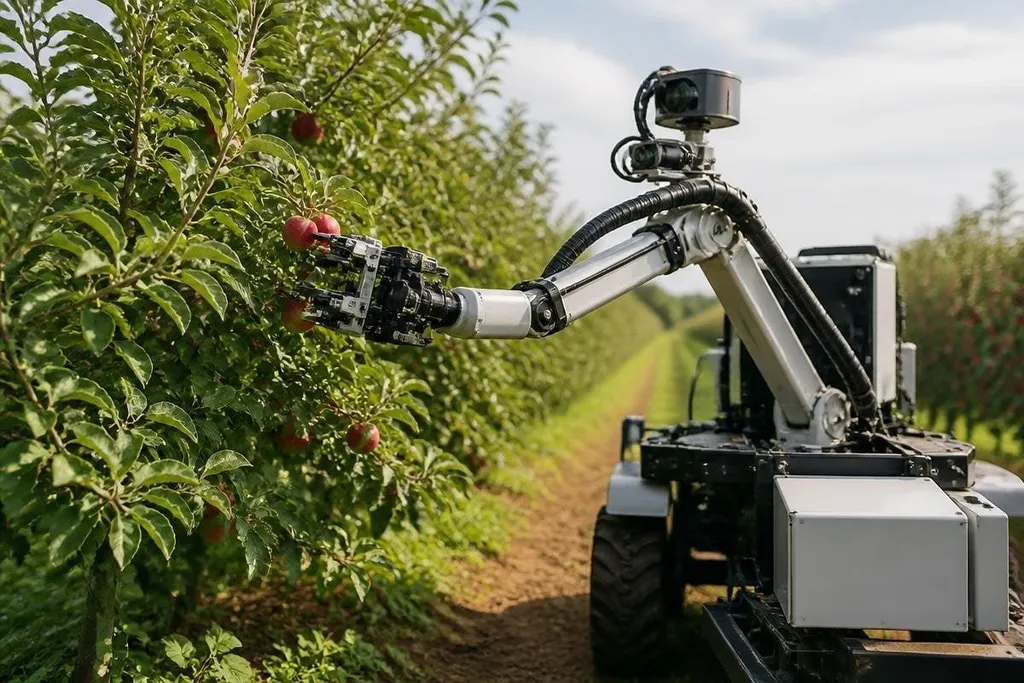
A harvesting robot can reach a crop row, but reaching the crop is the easy part. The harder work starts when leaves hide the fruit, sunlight changes the image, and each piece is at a different stage of ripeness. AI helps the robot decide what to pick, where to move, and how much force to use.
Quick read
- Cameras locate fruit and separate it from leaves, stems, soil, and empty space.
- Software can change the robot’s path and grip as field conditions shift.
- Picking speed, crop damage, weather, and repair needs still decide whether the system pays off.
The camera turns a crop row into a work area
A harvesting robot usually starts with cameras, depth sensors, or both. The software studies each image and marks likely targets, then estimates their position in three dimensions so the arm can reach the fruit without hitting nearby branches.
That task is harder than spotting a red object against a plain background. Fruit can overlap, partly hide behind leaves, reflect sunlight, or share a color with the soil. A vision model has to use shape, color, depth, and the position of nearby plant parts before the arm moves.
The robot also needs to decide if a target is ready. Ripeness may depend on color, size, texture, or the crop variety. A system that picks everything it sees can waste time on fruit that needs more growth and damage fruit that is ready for sale.
AI changes the arm’s next move
Once the robot selects a target, the software helps plan the arm’s path. It can choose an approach angle, adjust the wrist, and set the gripper’s force. These choices matter because a clean pick may require cutting a stem, twisting fruit, or supporting the crop with a second part of the arm.
The robot has to react when the first plan fails. A leaf may block the gripper. The fruit may move as a branch bends. The arm may reach the target but find that its angle leaves no room to remove it.
A useful system can inspect the new view and try a different motion instead of repeating the same move. This is where AI adds more than a fixed sequence of motor commands. It can select an action from what its sensors see at that moment. That does not remove the need for careful mechanics, calibration, or safe limits around people.
Field conditions expose the weak points
A model trained on clear images may behave differently in dust, rain, low light, or strong sun. Leaves change through the season, and a farm can contain several varieties with different colors and shapes. The robot needs training data that represents those conditions, or its decisions may become less reliable outside a test area.
The arm also faces a timing problem. More careful inspection can reduce damage, but slower picking may leave too much crop in the field. A farm operator has to judge the full task: how many usable pieces the robot picks, how often it stops, and how much help a person still needs to give.
A harvesting test needs the crop, robot model, row layout, picking rate, and damage count beside the claim. Robot24.com reporting can put those facts next to AI picking results, so the next check is whether the numbers hold when weather and crop conditions change.
The missing evidence is often simple. A video may show a successful pick, but it may not show the number of failed attempts, the crop damage rate, or how the robot works after weather changes. Those details matter more than a smooth demonstration.
What to check before buying or piloting one
A farm team can use this short guide when judging a harvesting robot:
- Target crop: Confirm the system was built for the crop, variety, and growing method on your farm.
- Picking action: Check whether it cuts, twists, or grips the fruit, and record the damage each method causes.
- Speed measure: Ask for picks per hour under field conditions, not only a short demonstration.
- Failure handling: Find out what happens when fruit is hidden, blocked, unripe, or out of reach.
- Human work: Count the people needed for loading, supervision, cleaning, repairs, and quality checks.
- Data control: Ask who stores the images and whether the system can keep working when the network connection drops.
I’d judge a harvesting robot by saleable crop collected per shift, not by how well its arm moves in a video. The useful number is the result after missed fruit, damaged produce, weather stops, and human support are counted.
AI can help harvesting robots make better choices in changing crop rows, but the farm still needs proof from its own conditions. The next question for any pilot is plain: how many saleable pieces does the robot collect before a person has to step in?